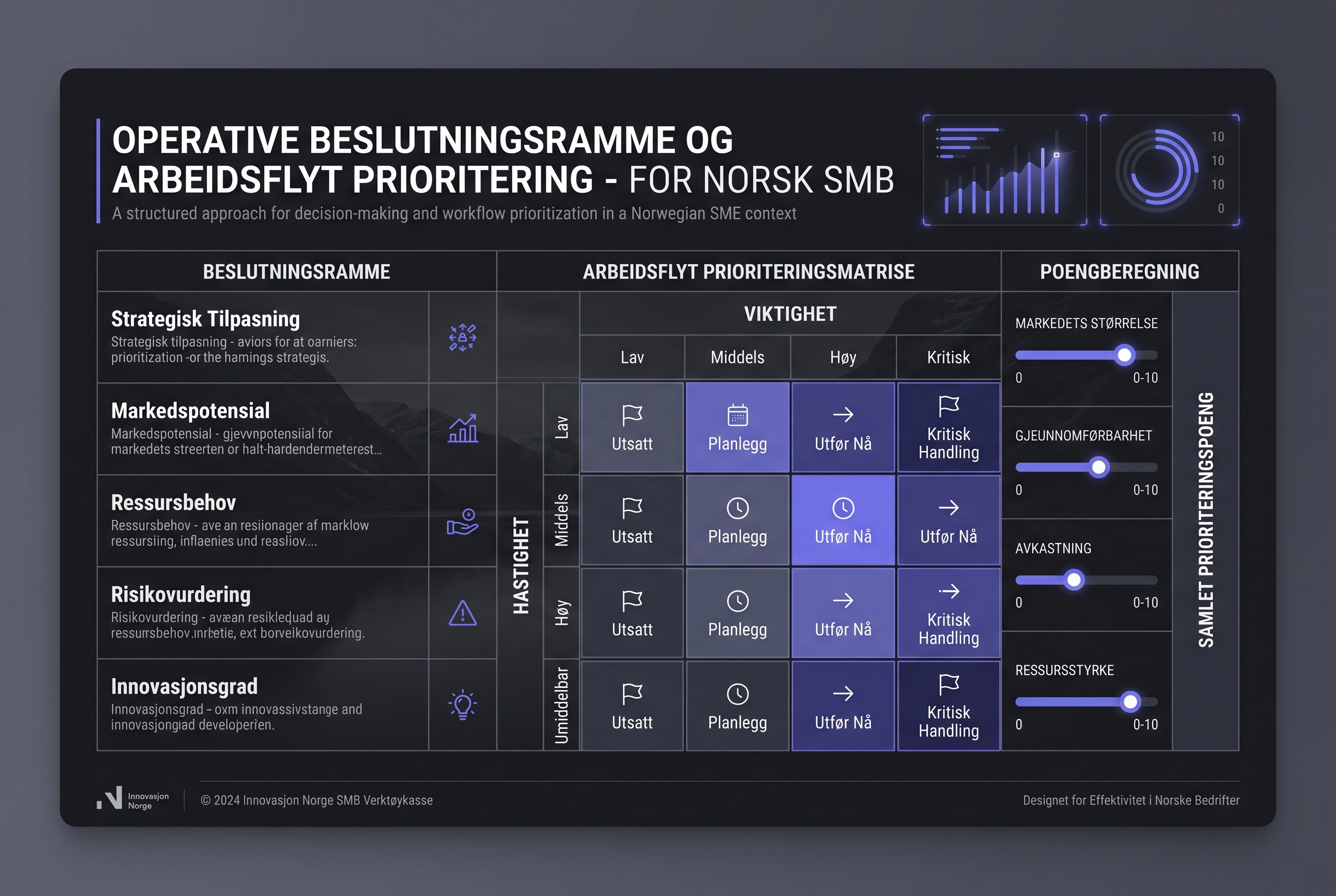
AI pilots in SMEs fail at a high rate. But the pattern is predictable, and the fix is straightforward. Here are the three most common reasons, drawn from real projects with Norwegian businesses.
1. Trying to automate everything at once
The most common mistake. A business sees what AI can do, gets excited, and tries to automate five things at the same time. The result: nothing gets finished properly, the team burns out on the project, and everyone concludes that "AI does not work for us."
It does work. But only if you limit the scope. One workflow. One clear outcome. Prove it works, then move to the next one.
2. No clear success metric
If you cannot say "this is what success looks like" before you start, you will never know if you got there. Too many pilots launch without a measurable goal. "We want to be more efficient" is not a metric. "We want to cut weekly report preparation from 6 hours to 1 hour" is.
Define the metric first. Then build around it.
3. Choosing tools before defining the workflow
This one is driven by vendor marketing. A business sees a demo of a tool, buys it, and then tries to find workflows that fit. That is backwards. The workflow defines the tool, not the other way around.
Map the process. Identify the bottleneck. Then find the simplest tool that solves it. Often the answer is less complex than expected.
The Norwegian context
Norwegian SMEs face specific pressure here. Digitisation is a priority in regional funding programmes. Innovasjon Norge, Skattefunn, and regional development funds all encourage businesses to adopt new technology. But the funding favours defined projects with clear deliverables, which is actually a good discipline. Use it.
The businesses that succeed with these programmes are the ones that scope tightly: one workflow, one measurable outcome, one timeline.
What to do instead
Before you buy any tool or start any AI project:
- Define one workflow you want to improve.
- Write down what success looks like, in numbers.
- Then choose the tool that fits that specific problem.
That sequence protects you from all three failure modes.