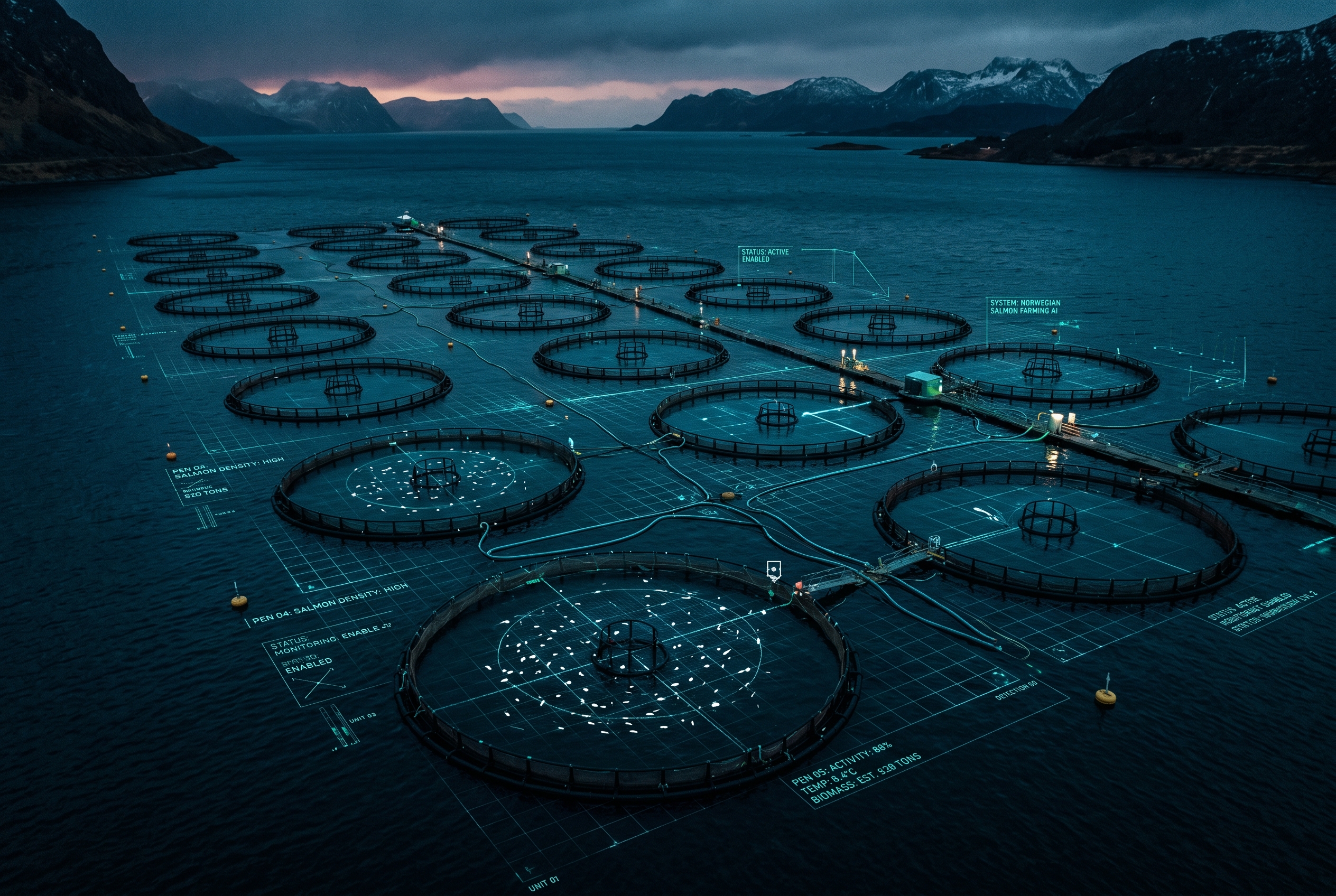
Aquaculture operators in Froya and Hitra already have cameras on their sites. Pen cameras, processing floor cameras, logistics yard cameras. The data is streaming continuously. But no one has time to watch all of it.
The monitoring gap
Camera systems in aquaculture were installed for a reason. Pen health monitoring, security, operational oversight, compliance documentation. But in practice, most footage only gets reviewed after something goes wrong. Someone notices a problem, then goes back to the video to figure out what happened.
That is reactive monitoring. The cameras are there, but the intelligence layer is missing.
What AI vision can do
AI-powered visual analysis can watch the feeds continuously and flag the things that matter:
- Anomaly detection. Unusual patterns in fish behaviour, unexpected objects in pens, equipment in wrong positions. The system learns what "normal" looks like and alerts when something deviates.
- Feeding response patterns. How fish respond to feeding events gives early indicators of health and appetite. AI can track these patterns across time and flag changes before they become visible to the human eye.
- Health indicators. Changes in swimming behaviour, surface activity, or congregation patterns can signal early-stage health issues. Catching these early reduces mortality and treatment costs.
- Equipment status. Net condition, mooring tension indicators, barge positioning. Anything with a visual signature can be monitored automatically.
The data is already there
This is not about installing new infrastructure. The cameras are running. The feeds are streaming. The only thing missing is the analysis layer that turns raw video into actionable information.
Adding AI vision to existing camera infrastructure is one of the lowest-friction automation projects an aquaculture operator can do. No new hardware. No new data collection. Just a new way of using what is already there.
A practical first pilot
Start with one camera on one site. Pick the feed that is most operationally important, usually a pen camera or a processing floor camera. Set up anomaly detection. Let it run for two weeks and review the alerts.
That gives you a real dataset to evaluate: how many genuine anomalies did it catch? How many false positives? What would you have missed without it? From there, you can decide whether to expand.