
Keeping clients informed without the manual effort
Service businesses lose clients not because of poor work but because of poor communication between touchpoints. Automating the communication layer fixes this.
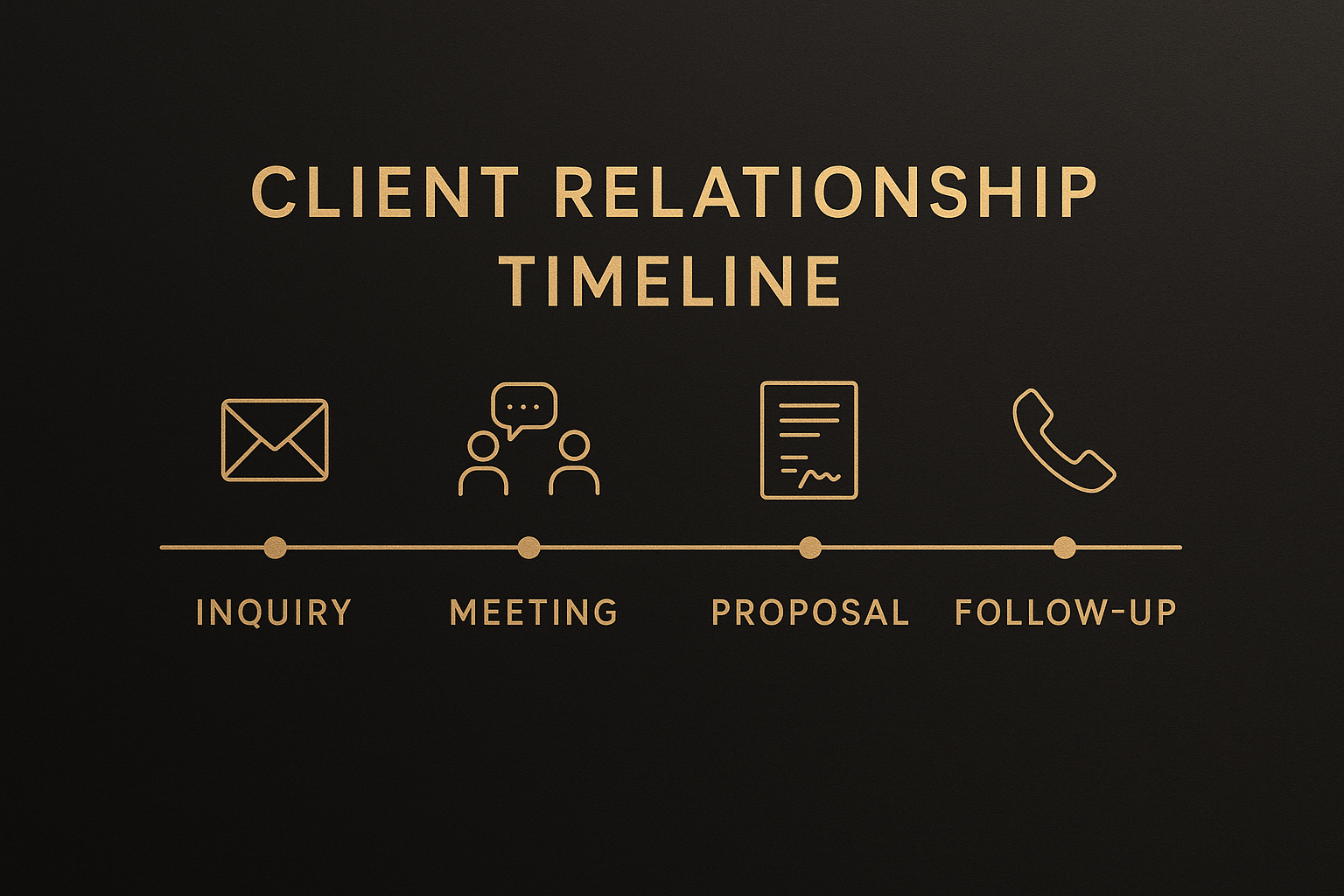
Most service businesses do good work. Where they lose clients is in the gaps between deliverables, when communication drops off and the client feels forgotten.
The communication gap
Professional service firms, contractors, and advisors in Norway often have strong delivery. The work gets done well. But between project milestones, between meetings, between the quote and the start date, communication drops off. Not because anyone is neglecting the client, but because the team is busy delivering for other clients.
The result: clients feel out of the loop. They wonder what is happening. They start looking at alternatives. And when they leave, it is rarely because of the work itself.
What systematic communication looks like
The fix is not more emails or more calls. It is the right communication at the right moments:
Quote follow-ups. Automatic check-in after a proposal is sent, timed to land at a natural interval.
Project updates. Brief progress summaries sent at key milestones, even if there is nothing new to report. "On track, next milestone is X" is more valuable than silence.
Reminders. Upcoming meetings, document requests, deadlines. The things that get missed when someone is juggling ten clients.
Post-delivery recaps. A summary of what was done, what the outcome was, and what comes next. Closes the loop properly.
Why this matters in Norway
Norwegian business relationships are built on trust and reliability. Clients expect consistency. When a business communicates well between touchpoints, it reinforces the relationship. When it does not, the silence gets interpreted as indifference, even if the work is excellent.
Automating the communication layer means every client gets the same consistent experience, regardless of how busy the team is. The team's capacity to deliver stays the same. The communication stops being dependent on someone remembering to send an update.
How to set it up
Define your communication plan once: what gets sent, when, and to whom at each stage of an engagement. That plan runs automatically for every client and every project.
The team still handles the conversations that need a human. Structural communication, quotes, reminders, updates, recaps, runs on its own.
Takeaway: Clients leave service businesses because of silence, not bad work. Systematic communication removes the silence without adding to the team's workload.
One measured action
Map your client communication touchpoints. Identify which ones are structural, same thing, same timing, every engagement. Those are your first automation candidates.
Related notes
The 5-day audit: what's actually costing your business money right now
Most owners already sense where the friction is. This five-day, self-run framework turns that instin…
What Norwegian SMEs should know before automating client communication
Automating client communication without clear boundaries can damage relationships. Here is how to de…
How to choose the first workflow to automate
Knowing where to start is the most common question before an automation pilot. A simple scoring fram…
Working through a similar challenge?
Start a conversation →