How to automate aquaculture reporting in Norway
Norwegian fish farms generate significant required reporting every day. Mattilsynet compliance, biomass logs, feed data, mortality records, shift handovers. Automation changes what that costs.
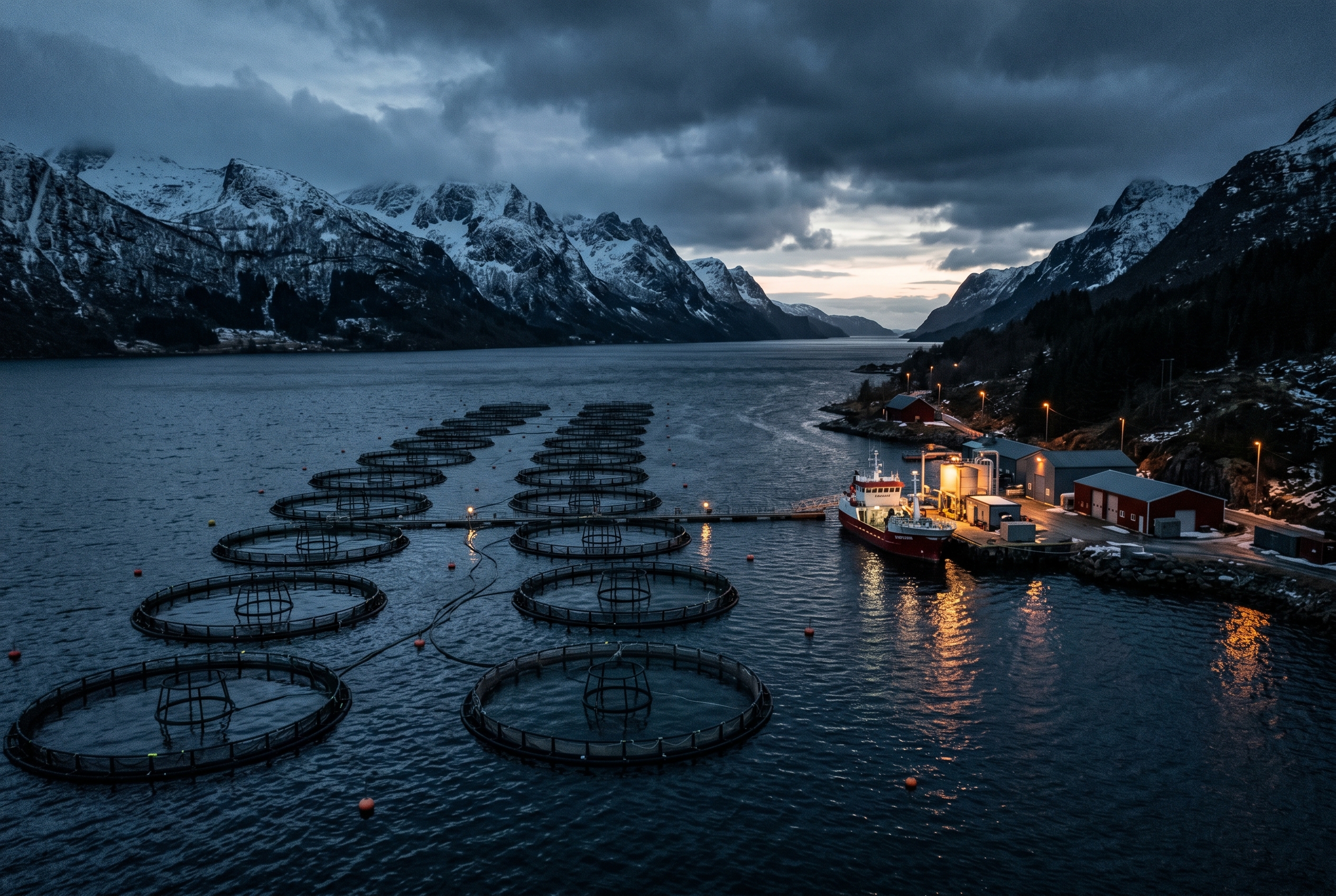
Norwegian aquaculture operations run on data. Every pen, every shift, every site generates information that has to be recorded, checked, formatted, and filed. Mattilsynet compliance reporting, daily biomass and feed logs, mortality records, lice counts, equipment status, shift handovers. For a mid-size operation with multiple sites, this is not a minor admin task. It is several hours of structured work, repeated every day, by people whose primary job is running a fish farm.
What Norwegian fish farms are required to report
The reporting categories are well-known to anyone in operations. The volume is the issue:
- Environmental data: water temperature, oxygen levels, salinity, current readings logged per pen per shift
- Lice counts: per-fish counts at required intervals, formatted for Mattilsynet submission
- Biomass and feed: daily feed amounts, feed conversion estimates, biomass calculations per site
- Mortality records: daily mortality counts per pen, cause codes where applicable, cumulative tracking
- Shift logs: what happened during the shift, equipment issues, deviations from plan, handover notes for the incoming crew
- Equipment status: cage condition, net inspections, feeding system status, sensor readings
Each category has its own format, its own submission cadence, and its own audience. Some go to regulators. Some stay internal. All of them require someone to compile and structure the data.
Where manual reporting breaks down
The process works until it doesn't. There are four places it consistently fails:
Late entries. Field data gets collected verbally or on paper during the shift and entered into systems hours later, sometimes the next day. By then, the person entering the data is working from memory, and the precision degrades. Lice counts recorded at 14:00 get logged at 22:00 with rough approximations.
Inconsistent formats across sites. When three sites use three slightly different spreadsheet templates for the same report, comparing data across the operation becomes its own project. Someone has to manually reconcile formats before any analysis is possible.
Data that exists but cannot be found. Production data lives in one system, environmental data in another, shift notes in a shared drive folder that hasn't been organised in two years. When a regulator asks for a specific period's data, someone spends a day assembling it from four different sources.
Handover notes that lose context. The outgoing crew knows what happened. The incoming crew needs to know. But if handover notes are written quickly into a chat thread or a paper log, the operational context disappears. Why was feeding reduced on pen 4? When was the last equipment check on the south cage? The information exists somewhere but takes time to find.
What automation looks like in practice
Automation does not replace operational judgement. It replaces the assembly and formatting work that happens around it.
Structured data capture at the pen level. Instead of collecting data on paper or verbally and entering it later, structured forms on a tablet or phone capture the reading at the point of observation. The data goes directly into the system, timestamped, attributed to the correct pen and shift. Late entries and approximations are eliminated because entry happens at the moment of measurement.
Automatic summary generation. Once the data is structured and in the system, generating the daily compliance summary or the weekly Mattilsynet report is not a manual task. The system assembles the data, populates the required format, and presents a draft for the responsible person to review and approve. On a typical farm, this replaces 45 to 90 minutes of daily report assembly with a two-minute review.
Report routing. The right report reaches the right person without someone having to remember to send it. Internal summaries go to the daglig leder each morning. Regulatory submissions route to the compliance officer. Shift handover reports reach the incoming team automatically before they start.
For more on reducing aquaculture reporting burden through structured automation, and for practical approaches to coordination across sites and shifts, those notes cover the operational detail.
The right starting point
The question is always where to begin. The answer is consistent: start with the workflow that costs the most time per week.
For most Norwegian fish farms, that is the daily or weekly compliance summary. It is high-frequency, follows a predictable structure, draws from data that already exists in the operation, and the time cost is visible. Everyone on the team knows how long it takes.
Starting there serves two purposes. First, you recover meaningful hours immediately. Second, you prove the system works on a real, high-stakes workflow before you commit to broader rollout. If the output quality is not right, you know after week one, not after six months.
Once the compliance summary is running reliably, the next workflow is obvious. Usually it is lice count reporting, or shift handovers. Each one follows the same pattern: structure the input, automate the assembly, route the output. The compound effect builds over time.
IPRESTANDA builds these reporting systems for Norwegian aquaculture operators. If you want to map out where automation makes the most sense in your operation, talk to us about your reporting workflow.
One measured action
Identify the compliance report that costs the most time per week. That is the right first workflow to automate. Start there, prove it, then expand.
See also
Related notes
What the EU AI Act Actually Requires From Norwegian Aquaculture Operators
The EU AI Act doesn't have an "aquaculture" section, but Norwegian operators using sea lice detectio…
The Operational Cost Your P&L Does Not Show: Why Norwegian Aquaculture Leaders Are Treating Workforce Health as a Data Problem
Musculoskeletal absence in Norwegian aquaculture is one of the most consistent and least managed ope…
From Shift Patterns to Safety Risk: Using AI to Get Ahead of Workforce Injury in Norwegian Aquaculture
Musculoskeletal injury in Norwegian aquaculture does not arrive without warning. It leaves traces in…
Working through a similar challenge?
Start a conversation →