From Shift Patterns to Safety Risk: Using AI to Get Ahead of Workforce Injury in Norwegian Aquaculture
Musculoskeletal injury in Norwegian aquaculture does not arrive without warning. It leaves traces in shift allocation records, task rotation logs, and minor incident data long before the formal absence. AI can read those traces before the cost becomes unavoidable.
The word injury implies a moment. A specific event with a before and after. In aquaculture and marine logistics, most of the health cost does not work that way.
It builds. A wrist that handles ten thousand grip repetitions on a processing floor over a winter does not fail on one specific repetition. The damage accumulates across months and the clinical outcome, whether that is a formal diagnosis or an extended absence, arrives long after the operational conditions that caused it.
That delay is both the problem and the opportunity. The problem is that by the time the cost is visible, the trajectory is established. The opportunity is that the data tracking the trajectory is available earlier, in your shift allocation system, your incident records, your task rotation logs, and your absence history.
Where the signal lives before the incident
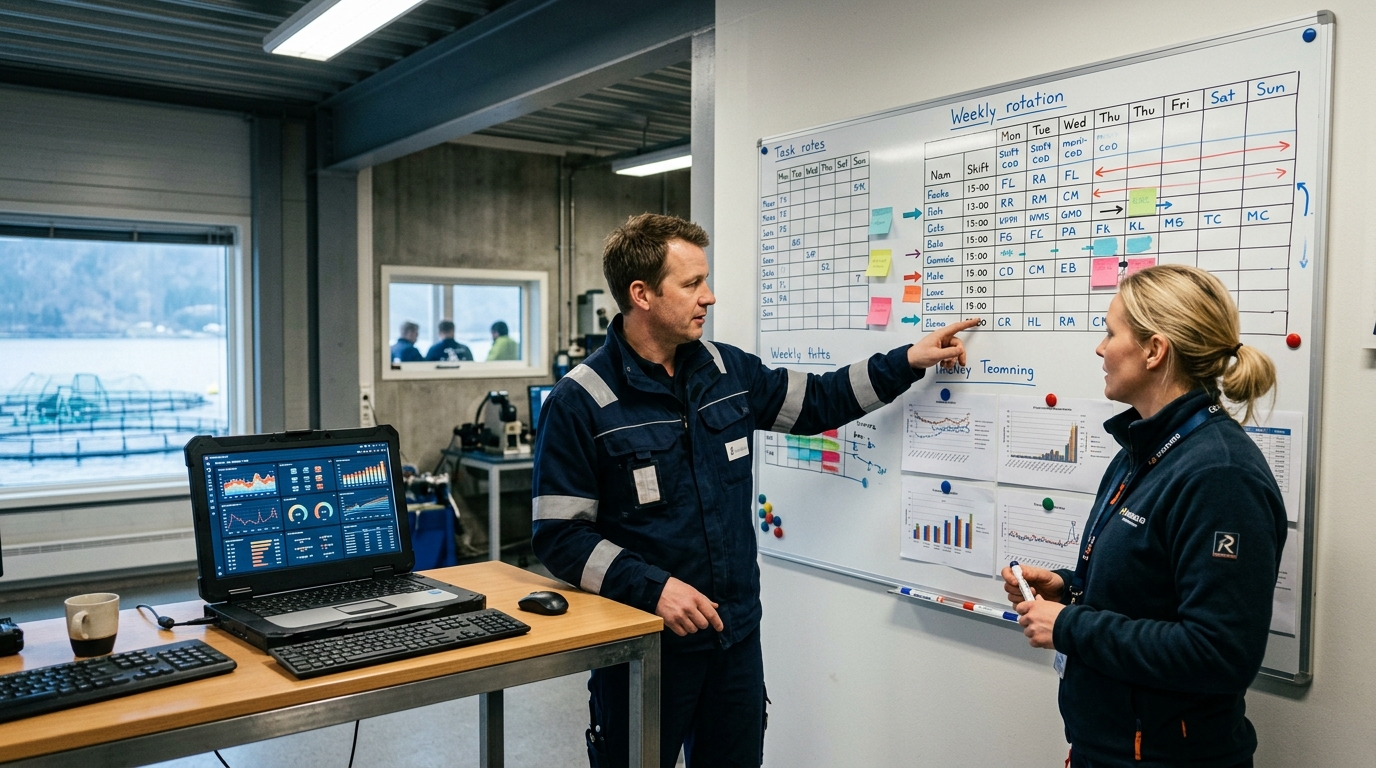
Shift allocation data is the most underused operational intelligence source in most aquaculture businesses. It is treated as a scheduling tool, which it is. It is also, when read with the right question, a map of physical load concentration in your workforce.
The question is simple: which workers have been on the highest-risk physical tasks most consistently, with the least rotation, over the longest unbroken runs?
In Norwegian aquaculture contexts, the tasks with the highest musculoskeletal risk profile are well-established. Cold-environment processing work involving sustained grip and repetitive wrist movement. Net handling with shoulder and lower back loading. Harvest operations combining all three. These are not secret. The physical demands are known. What most operations do not do is connect the scheduling record to the health outcome data and ask whether load concentration is driving the pattern.
AI does this by pulling together the data sources that exist in separate systems and reading them as a whole. Scheduling records, incident logs, sick leave history, and task rotation records held in different tools can be connected through a straightforward data integration. The output is not a diagnosis. It is an early warning flag: this worker, in this role, has had this load concentration over this period, and our historical data suggests the probability of a significant absence event in the next quarter is elevated.
That flag, given early enough, changes what is possible.
The connection to shift coordination
The shift coordination piece covers the operational gains from reducing the manual overhead of running multi-site shift management. The health dimension adds a layer to that same argument.
When shift allocation is managed manually across multiple sites and roles, the scheduler is trying to cover operational coverage requirements, manage individual availability and skill profiles, and maintain fair distribution of desirable and undesirable shifts. That is already a complex optimisation problem. Adding health risk concentration as a variable, which worker has had the most consecutive days on the highest-risk task, is genuinely beyond what manual scheduling can track reliably.
An AI-assisted scheduling layer that flags load concentration risk does not replace the scheduler's judgement. It gives them information they cannot hold in their head. The decision still sits with the person running the operation. The information gap that currently makes that decision impossible to make well is closed.
What getting ahead looks like in practice
Three operations in Trøndelag integrating shift data with health outcome records found the same pattern. Concentration signals appeared in the data 6 to 18 months before the correlated absence events. In each case, the window to intervene was open. In each case, no one was reading the data in a way that surfaced it.
Getting ahead means building the reading layer before the next round of incidents accumulates.
Practically, this means connecting three data sources: shift allocation exports, incident log records, and sick leave records. In most Norwegian aquaculture operations these live in three different systems. The connection work is a one-time integration, not an ongoing manual task. Once connected, the pattern detection runs continuously.
The output feeds into two operational responses. First, task rotation decisions for workers the data flags as approaching high-load thresholds. Second, proactive physical conditioning support for the roles and individuals carrying the highest ongoing risk. The workforce data piece covers the data side. The intervention programs are the operational counterpart.
Where this fits in the broader picture
The aquaculture compliance work established a frame that applies here directly: the operations that are ahead are not doing more manual work. They have built systems that surface the right information at the right time, so the people running the operation can make better decisions rather than better guesses.
Workforce health risk is one of the most consequential areas where that gap exists. The data is there. The intelligence layer to read it is available. The cost of not building it shows up, eventually, in absence rates, turnover, and the productivity losses that precede them.
One measured action
Take one high-risk role in your operation, ideally one with documented repetitive cold-exposure work. Pull the last six months of shift allocation for that role. Count consecutive days on the same task without rotation. That number tells you whether you have a concentration risk.
See also
Related notes
The Operational Cost Your P&L Does Not Show: Why Norwegian Aquaculture Leaders Are Treating Workforce Health as a Data Problem
Musculoskeletal absence in Norwegian aquaculture is one of the most consistent and least managed ope…
The Workforce Data Norwegian Aquaculture Companies Are Sitting On
Shift logs, incident reports, sick leave records, and task rotation data already exist in Norwegian …
How Norwegian aquaculture companies are using AI to get ahead of compliance, not just keep up with it
Compliance in Norwegian aquaculture has always been demanding. The companies getting ahead of it are…
Working through a similar challenge?
Start a conversation →